EdTech After the AI Boom: What Actually Works in 2026
AI flooded EdTech. Most of it didn’t land. Here’s what actually works in 2026
EdTech After the AI Boom: What Actually Works in 2026
Our earlier piece covered the market: $2.6B invested in edtech in 2025, highlighting the accelerating consolidation and capital chasing outcomes. You know the numbers.
Here’s what the numbers don’t show.
Only 27% of higher-ed institutions have embedded AI into more than one core platform. Fewer than 8% actually measure whether it improves learning. A separate Frontiers study tested AI features across Khan Academy, Coursera, and Codecademy — and found them “subtle and minimally impactful.” What learners actually responded to was platform structure. Not the AI on top of it.
Meanwhile, the pressure is real. The WEF’s Future of Jobs Report 2025 found that 59 in 100 workers will need reskilling by 2030, and 63% of employers call skills gaps their #1 barrier to transformation — above capital, above regulation.
Deloitte’s Tech Trends 2026 puts it plainly: AI layered onto broken processes just breaks faster. The fix isn’t a better model. It’s modular, API-first architecture underneath it. Modular content takes 40-60% less time to build. Microlearning modules hit 80-90% completion, versus ~30% for long-form courses. Structure drives outcomes. AI amplifies them.
EdTech Products That Are Built Right
Khanmigo — AI Tutoring / K-12
Khanmigo doesn’t give answers. It asks questions back — guiding learners through problems using a Socratic approach, grounded in Khan Academy’s structured content library. Pilot data shows a 1.4 grade-level improvement in tested districts. Microsoft backed it with Azure infrastructure and a custom math model (Project Phi-3) to go deeper on numeracy.
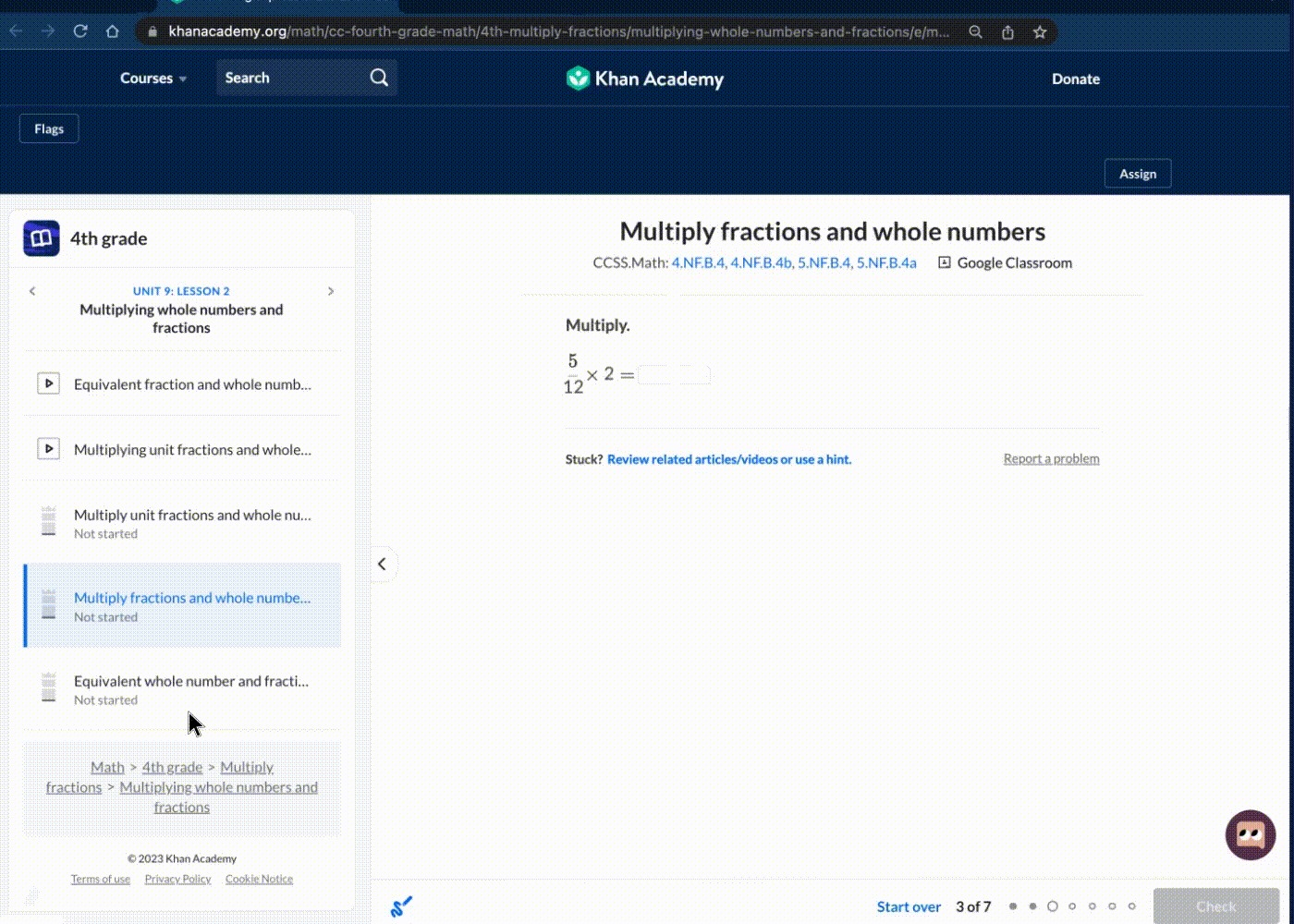
What builders should notice: The AI is content-aware. It knows which exercises and videos exist and can reference them contextually. That’s only possible because the underlying content is modular, tagged, and API-accessible. The intelligence is downstream of the architecture.
MagicSchool AI — Teacher Productivity / K-12
In 18 months, MagicSchool reached millions of monthly active educators, partnered with 10,000+ schools, and currently operates in 160 countries. It raised $45M in February 2025 — 72% of all AI-in-education funding during that quarter. The product handles lesson plans, rubrics, IEPs, differentiation. Prep work that used to take hours.
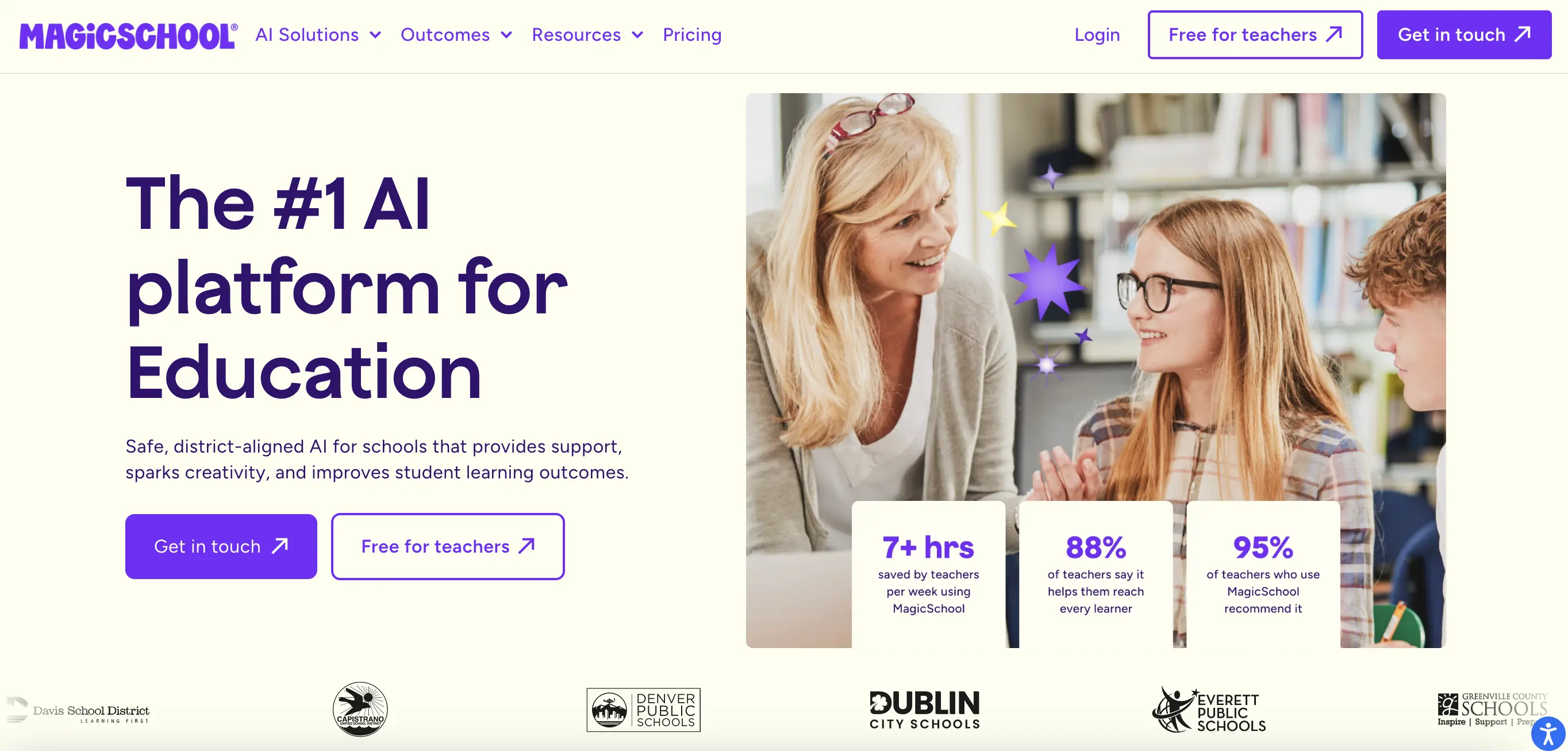
What builders should notice: MagicSchool succeeds by being workflow-native. It didn’t ask teachers to change how they work. It fit into what teachers already do and made it faster. That’s the integration-first principle from HolonIQ’s 2026 framework in practice.
Duolingo Max — Language Learning / Consumer + B2B
At Duocon 2025, Duolingo launched AI Video Call across nine courses — real conversation practice with Lily, live feedback, post-call review. They also added LinkedIn Score integration: verified language skills, directly on your professional profile. Learning proof that travels.
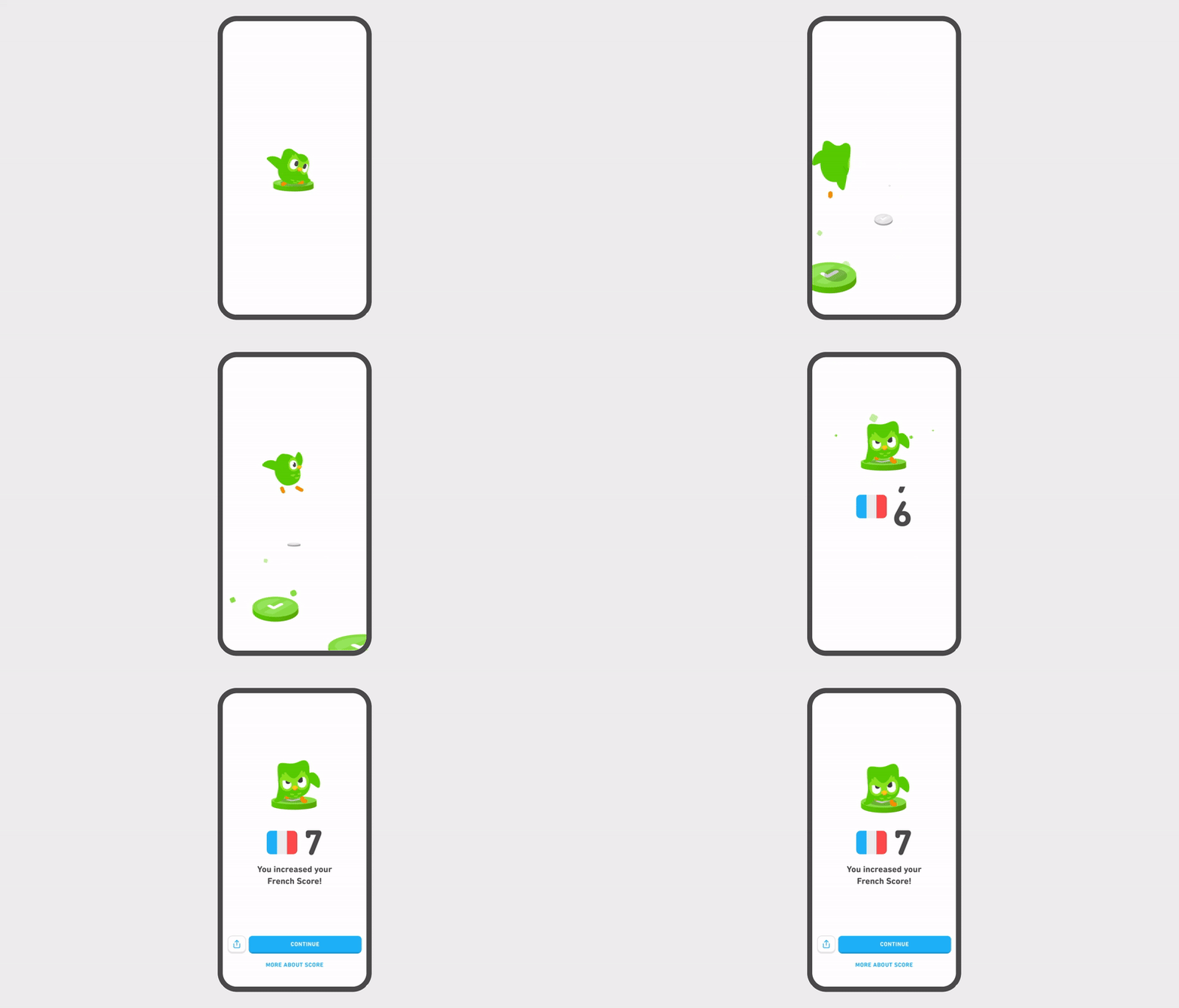
What builders should notice: Duolingo’s edge isn’t the AI. It’s behavioral data from hundreds of millions of learners, and A/B testing at a scale most teams can’t imagine. The intelligence is downstream of that infrastructure, and the value proposition – what really matters to users – is at the core of the product ecosystem. Be it Duolingo Max or a Linkedin skill verification.
Sana from Workday — Enterprise Learning / Workforce
Workday acquired Sana in November 2025 for $1.1B. Sana Learn brings learning management, content generation, analytics, and personalized tutoring into one AI-native platform. It now sits inside Workday as the "front door for work" — knowing your role, your projects, and your org’s skill gaps.
The Workday-Sana deal is the clearest signal of where enterprise EdTech is heading: learning embedded directly into work infrastructure, not siloed in a separate LMS. The AI knows what role you’re in, what projects you’re running, and what skills the organization needs. That’s scalable system architecture applied to corporate learning.
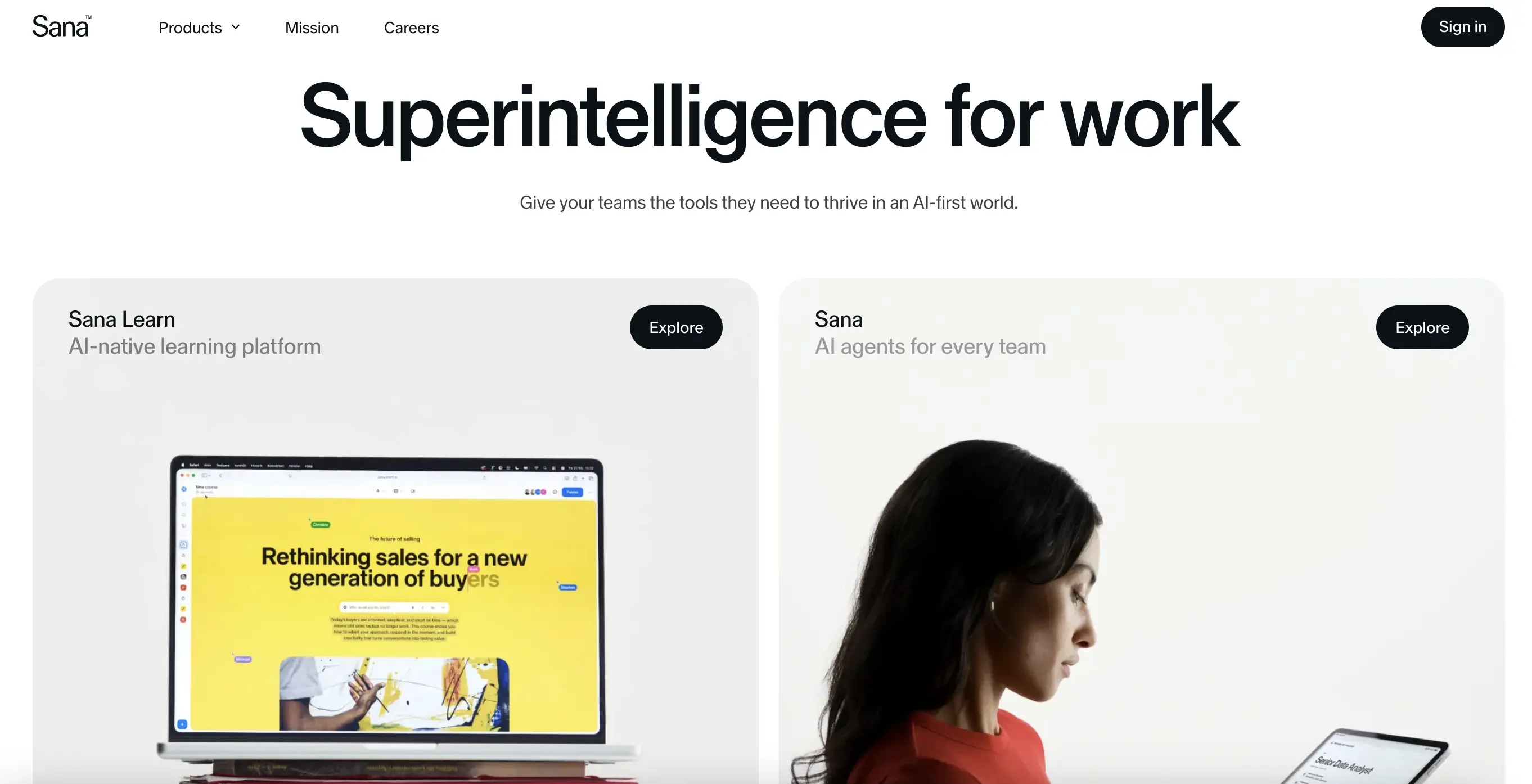
What builders should notice: Sana wasn’t acquired for its chatbot. It was acquired for its AI-native architecture — content generation, knowledge retrieval, agent orchestration — and its ability to connect into existing enterprise data layers via API. Modular, API-first, observable. Exactly what Deloitte’s blueprint calls for.
Coursera Enterprise — Workforce / Higher Ed
At Coursera Connect 2025, the company announced AI-powered Course Builder for partners — letting educators author from scratch with just a course idea, ingest existing materials, and receive instructional design guidance from an AI coach. Combined with Skills Tracks — role-based learning paths with measurable outcomes — and Role Play simulations for practice in realistic scenarios, Coursera is moving from a content catalog to a dynamic skill infrastructure.
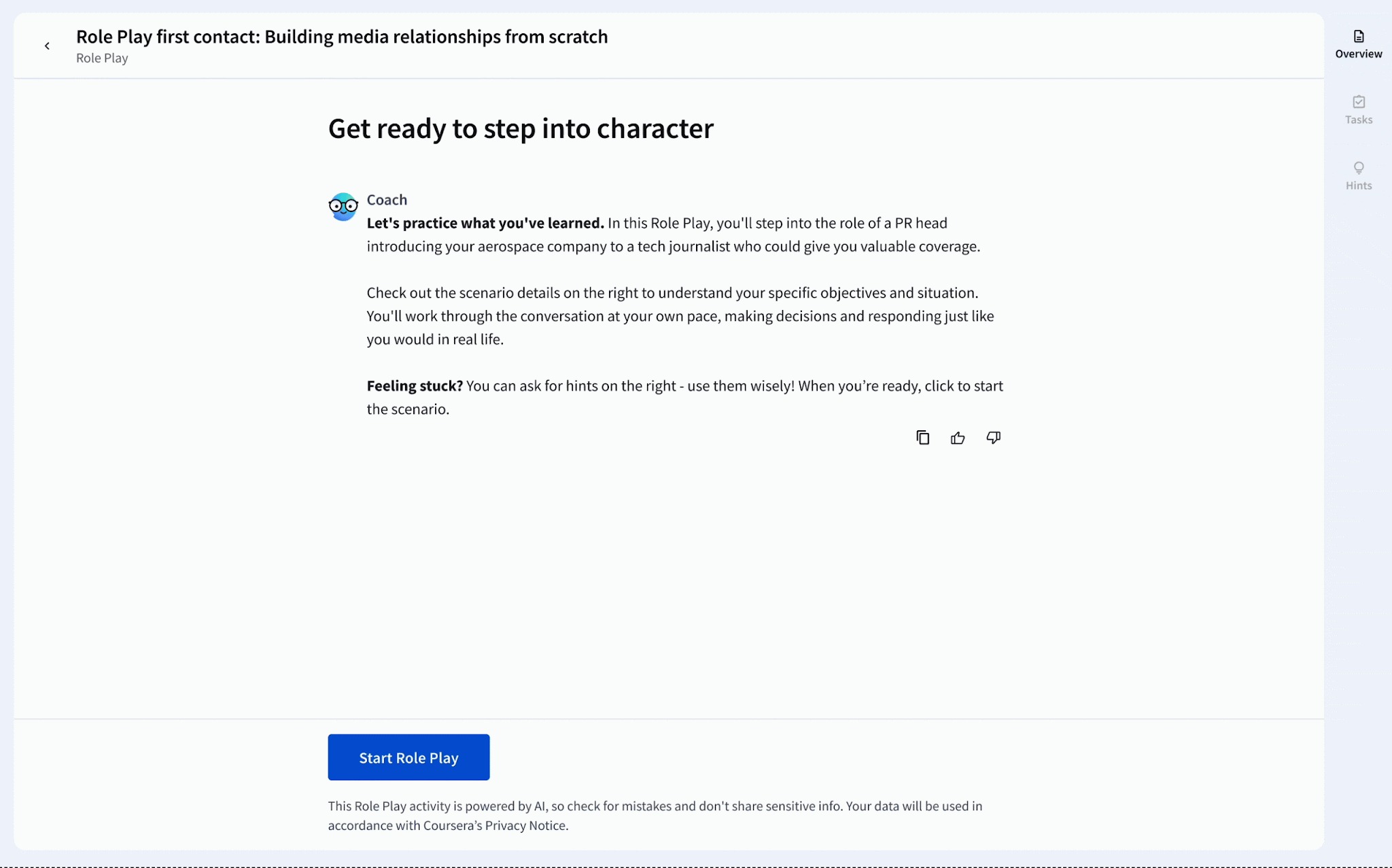
Coursera now serves 183 million registered learners as of mid-2025, with Skills Tracks available to enterprise customers for accelerating specific workforce capabilities. The partnership with Anthropic in late 2025 added Claude-powered courses for developers and professionals — building AI fluency at scale inside a trusted institutional framework.
What builders should notice: Coursera’s architecture separates content creation, content delivery, and skill measurement into distinct, upgradeable layers. Skills Tracks can be updated as employer needs change, without rebuilding the underlying courses. That’s component-based software development applied to the curriculum. It’s also why Coursera was named a Leader in the Forrester Wave for Technology Skills Development Platforms in Q2 2025.
The Pattern for Prominent EdTech Products
Look at what these products share:
Content that’s modular and composable. Data layers that track mastery, not just activity. AI that operates through the content structure, not on top of it. Human expertise is kept in the loop for the cases that matter. And integration with workflows that already exist — not a request to rebuild how educators or companies operate.
None of these platforms succeeded by adding AI to a broken foundation. They either built the foundation correctly from the start, or restructured it before the AI layer made sense.
That’s the architectural principle. And it’s not platform-specific. It applies to any team building EdTech — whether you’re building a corporate LMS, a tutoring product, a compliance training tool, or a skills marketplace.
For Teams Building in the Education Space
The research and the products are pointing in the same direction. Structure first. Outcomes defined up front. AI as infrastructure, not decoration.
If you’re building an education platform and you’re still treating the AI layer as the headline feature — or still running courses as fixed linear sequences — the gap between your product and what the market is rewarding is growing, not shrinking.
Build the blocks right. The rest follows.

Moombix

Kennitalan

Wooskill
technical assessment,
and project scoping.
UI/UX design, and
technical specifications.
reviews, and continuous
integration.
testing, security audits,
and bug fixes.
documentation, and
ongoing support.