AI Is Growing Up — And It’s Starting to Look Like Infrastructure
A practical look at scalable AI systems, modular automation, and infrastructure built for real-world software.
Not long ago, adding AI to a product was enough to make it feel cutting-edge. A chatbot here, a recommendation engine there, maybe some automation layered on top — it didn’t take much to signal innovation. That phase is ending. What we’re seeing now, across industries, is a shift from experimentation to expectation. AI is no longer judged by whether it works in a demo, but whether it holds up under real conditions: scale, cost pressure, messy data, and unpredictable user behavior.
This shift is subtle but decisive. As soon as AI moves from feature to foundation, it stops being a playground and starts behaving like infrastructure. And infrastructure, unlike demos, has very little tolerance for improvisation.
At Unibrix, this is exactly where we operate — building AI-ready product architecture, integrating intelligent systems into existing platforms, and ensuring that AI behaves as part of a larger system rather than an isolated feature. The work is less about adding intelligence and more about making sure that intelligence fits.
Sales Automation with n8n — Where AI Actually Delivers
One of the clearest examples of this transition comes not from consumer-facing AI, but from internal systems — particularly sales operations. The problem, at first glance, is familiar: large datasets filled with duplicated, irrelevant, or poorly structured leads, combined with manual qualification and enrichment processes that slow teams down.
Instead of layering AI on top, the system was rebuilt around n8n as a central orchestration layer, treating automation as infrastructure rather than tooling.
What emerged was not an AI system, but a modular workflow engine, where AI plays a specific, controlled role.
An illustration of the system:
[Slack Interface]
↓
[Trigger + Controller Layer]
↓
[n8n Orchestration Engine]
↓
[Validation Layer] → [Rule-Based Logic]
↓
[Selective AI Layer (only ambiguous cases)]
↓
[Batch Processing Engine]
↓
[Google Sheets / Reports]
↓
[Monitoring + Analytics]
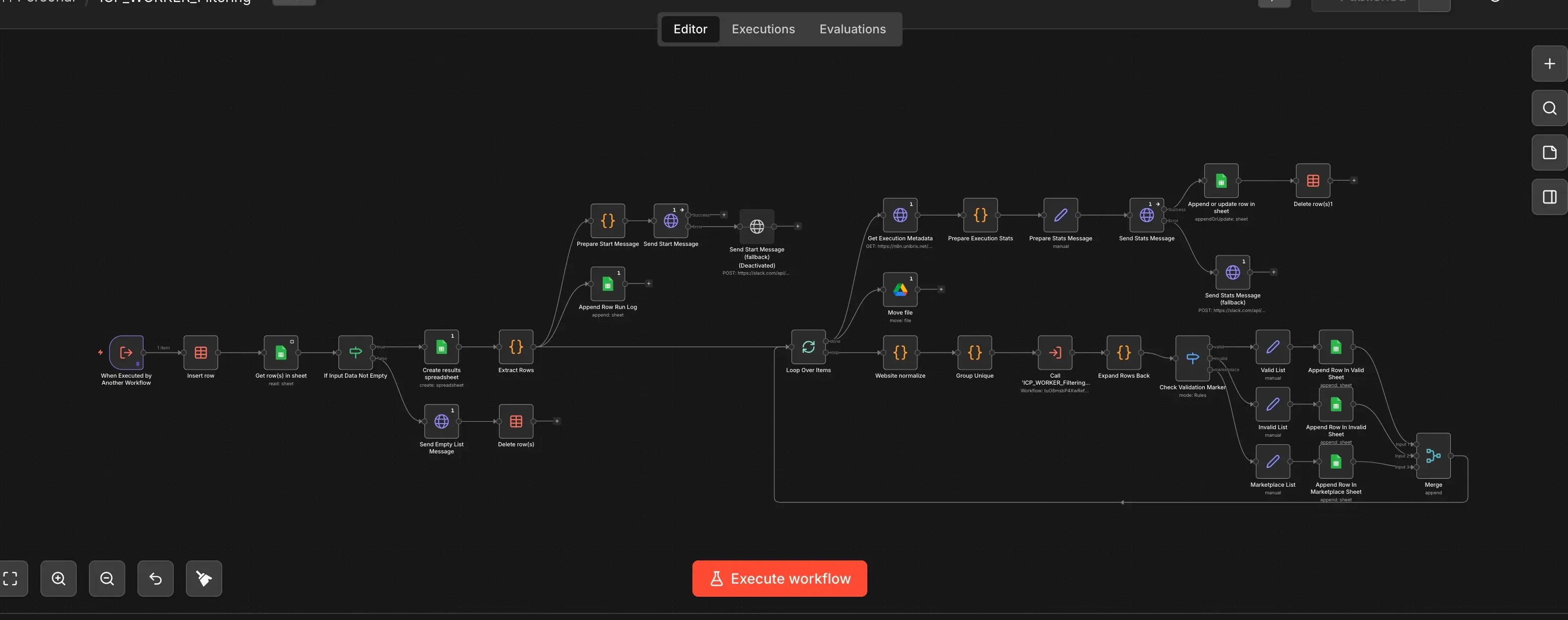
The key insight was restraint. AI wasn’t applied universally, but selectively — only where rule-based logic failed. This reduced cost, improved performance, and kept the system predictable. Batch processing, deduplication, and domain-level grouping further optimized execution, ensuring that the system scaled without unnecessary complexity.
At Unibrix, this approach reflects a broader principle: AI integration services should prioritize system efficiency over feature density. The result is not just automation, but a stable pipeline that sales teams can rely on.
HR Automation — Quiet Systems That Actually Work
While sales systems often get attention, HR automation is where the practical value of AI becomes even clearer. The challenge here wasn’t intelligence, but consistency — large volumes of survey data, manual aggregation, repetitive formatting, and a high risk of human error.
Rather than introducing complexity, the solution simplified the workflow into a structured, automated pipeline that operates behind the scenes.
An illustration of the HR workflow:
[Survey Inputs / Google Sheets]
↓
[Data Parsing + Normalization]
↓
[Validation Layer (AI + Rules)]
↓
[Aggregation Engine]
↓
[Template Formatting]
↓
[Report Generation]
↓
[Delivery via Slack]
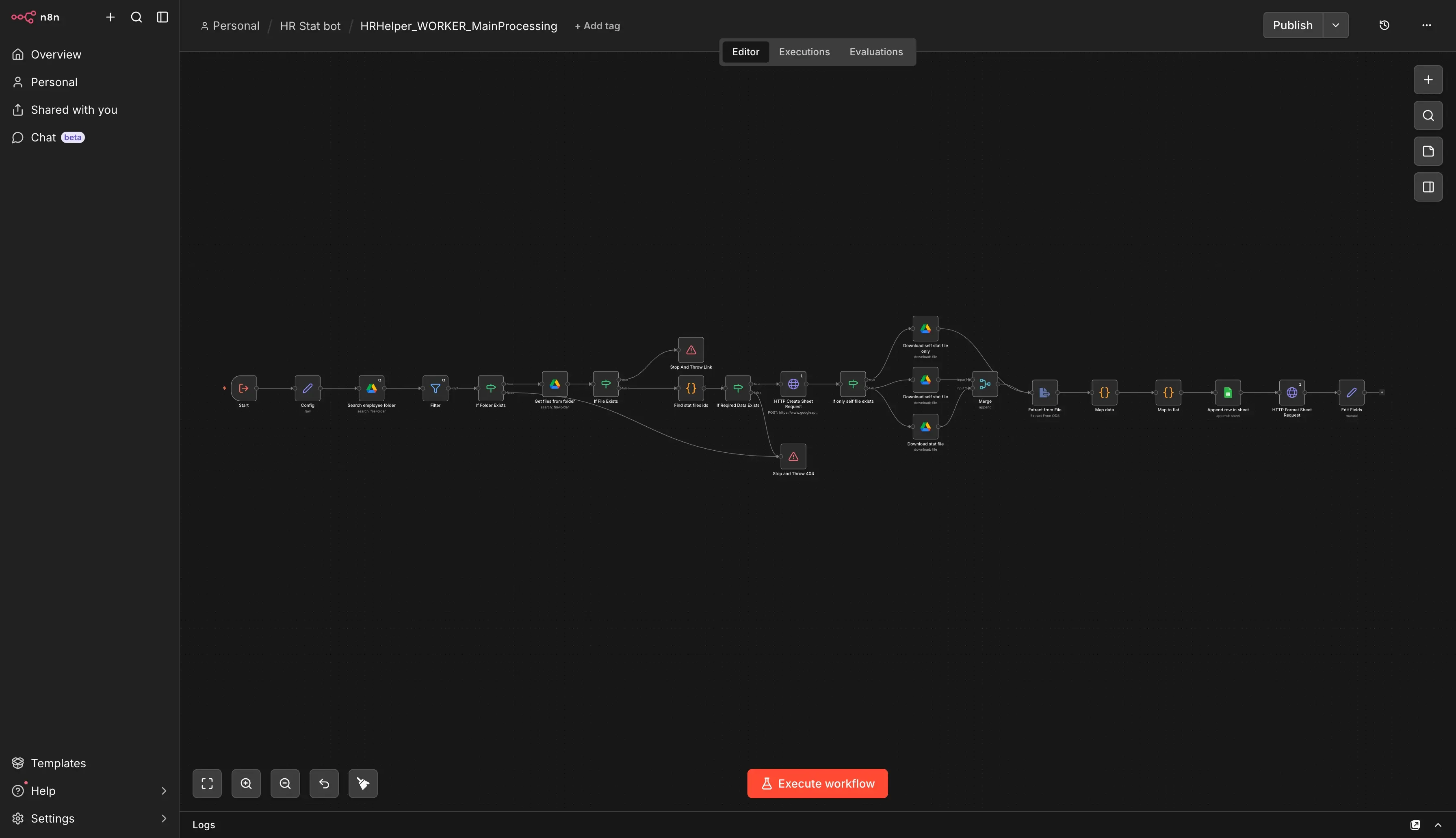
What distinguishes this system is not sophistication, but reliability. Every step is predictable, every output standardized, and every interaction accessible through a simple interface. Security, however, becomes a defining factor: separate environments, isolated credentials, and segmented access ensure that sensitive data remains protected.
This is where AI system architecture design becomes critical. In domains like HR, AI cannot operate freely — it must function within clearly defined boundaries. At Unibrix, we design these systems with secure AI environments and controlled integrations, ensuring that automation enhances operations without introducing risk.
SnapNutrition — Testing AI Where Inputs Get Messy
Internal products like SnapNutrition serve a different purpose: they allow experimentation with real-world AI behavior under less controlled conditions. With the rise of rapid prototyping, often referred to as “vibe coding,” and with modern tools like Cursor, Claude, and Gemini Code, it’s now possible to build functional applications at unprecedented speed.
That’s what our founder did to showcase new opportunities and suggest new ways for Unibrix to deliver value. The premise of this app — personalized nutrition insights — appears straightforward, but quickly reveals the challenges of working with inconsistent user input and unpredictable usage patterns.
An illustration of SnapNutrition process:
[User Input (text / habits / goals)]
↓
[Input Structuring Layer]
↓
[AI Analysis Engine]
↓
[Constraint + Logic Layer]
↓
[Personalized Output]
What becomes evident is that AI performs best when it operates within constraints. Without structured inputs and bounded outputs, personalization degrades into noise. SnapNutrition highlights a recurring truth: machine learning software development is less about intelligence and more about control.

For Unibrix, this translates into building AI platforms where logic, validation, and structure guide every output, ensuring that systems remain usable and trustworthy even as complexity grows. What’s more, supporting and scaling your vibe coded app is an emerging service at Unibrix. We can help you take it to another level.
What Actually Works in AI Systems Today
Across all these cases, a consistent set of principles is seen: AI works best when it is applied selectively, integrated carefully, and supported by a strong architectural foundation. Systems that rely too heavily on AI tend to become unpredictable, while those that treat it as one component within a modular structure achieve better results with fewer resources.
Cost management is no longer optional. Without optimization — through model routing, usage control, and efficient orchestration — AI systems quickly become unsustainable. Observability is equally important. If teams cannot track how AI behaves, why it makes decisions, or how resources are consumed, scaling becomes guesswork.
At Unibrix, this is addressed through a combination of:
- scalable AI infrastructure
- AI cost optimization layers
- AI observability and analytics
- secure system integrations (MCP-based)
- dynamic AI-driven interfaces
The goal is not just to build AI, but to make it predictable, measurable, and aligned with business logic.
From Vibe Coding to Real Systems
We are entering a phase where building is easier than ever. Ideas move quickly, prototypes appear overnight, and entire products can be assembled with minimal effort. But speed alone does not create sustainable systems.
AI is no longer the differentiator. Structure is.
The teams that succeed are not those who build the fastest, but those who understand how to turn early momentum into stable infrastructure. They know where to apply AI, where to limit it, and how to integrate it into systems that can evolve over time.
This is where Unibrix operates. We work with teams that already have something — an idea, a prototype, a product with traction — and help them turn it into something that lasts. Through AI integration services, platform development, and modular system design, we ensure that what starts as an experiment can grow into a reliable, scalable solution.
The tools are available. The barriers are low. The opportunities are everywhere.
What matters now is how the pieces are assembled. Consider the optimal path.

Moombix

Kennitalan

Wooskill
technical assessment,
and project scoping.
UI/UX design, and
technical specifications.
reviews, and continuous
integration.
testing, security audits,
and bug fixes.
documentation, and
ongoing support.