Healthcare Software Trends 2026: Modular, Secure, Compliant Systems
AI, telehealth, and rising compliance are reshaping healthcare. Modular, secure, custom software is the basis for scalable digital care.
Why Healthcare Needs Modular Software in 2026
The healthcare sector is undergoing a dramatic transformation in 2026 — driven by AI, telemedicine, stricter compliance, and a need for scalable, secure platforms. For CIOs, Heads of Departments, and healthcare enterprises planning future-proof digital strategies, now is the moment to think modular, compliant, and deeply custom.
The Changing Landscape of Healthcare Software
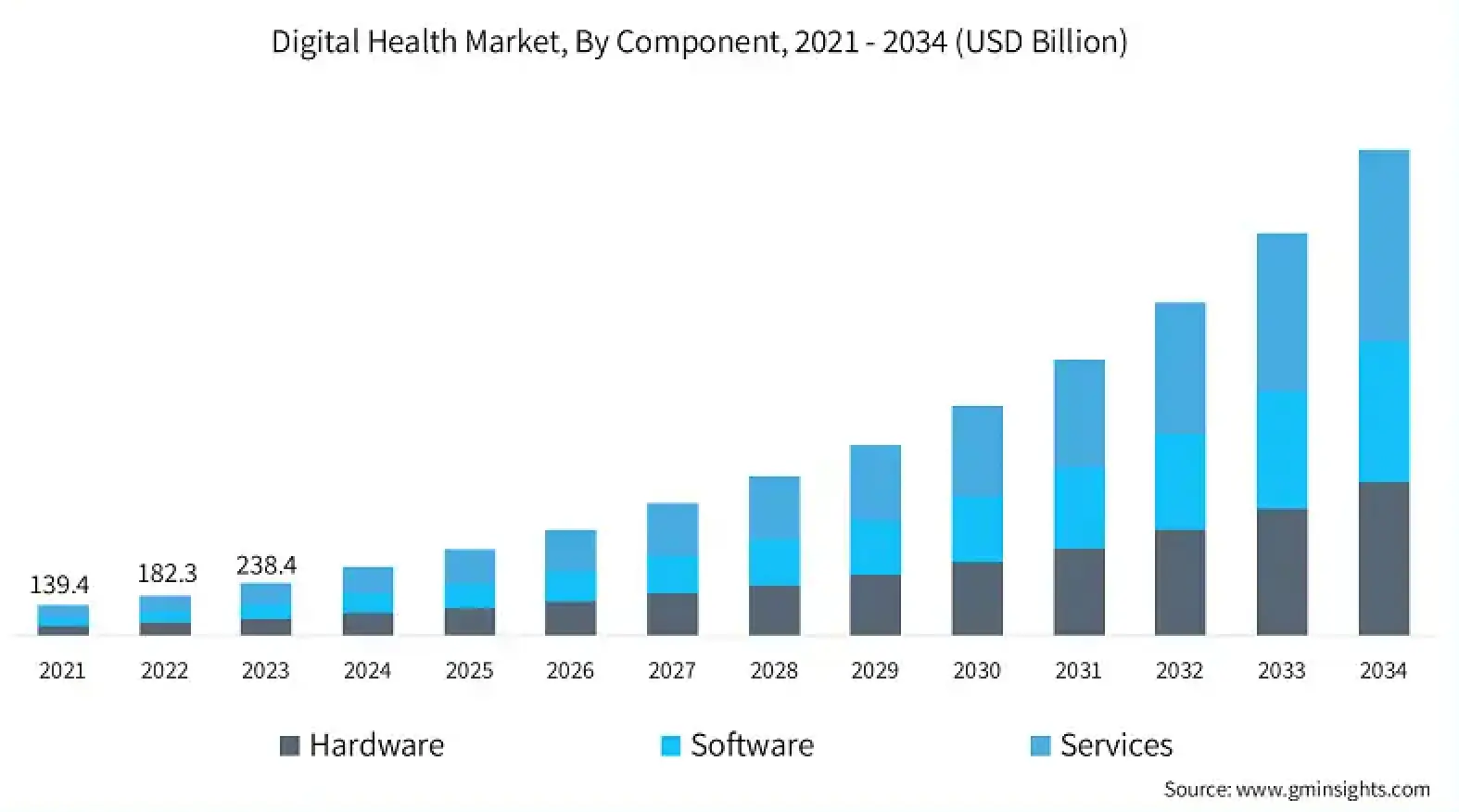
- The global “smart healthcare” market — combining cloud, telemedicine, IoT, and digital health platforms — was estimated at USD 360.02 billion in 2025, with projections reaching nearly USD 1.5 trillion by 2034.
- Artificial Intelligence (AI) and Machine Learning are no longer fringe innovations — they’re becoming core to diagnostics, image and data analysis, predictive care, telehealth, and workflow automation.
- Demand for telemedicine, remote monitoring, electronic health records (EHR), patient-facing portals, and digital care-management platforms continues to rise, accelerated by patients’ expectations for convenience, privacy, and access.
At the same time, the industry faces mounting pressures:
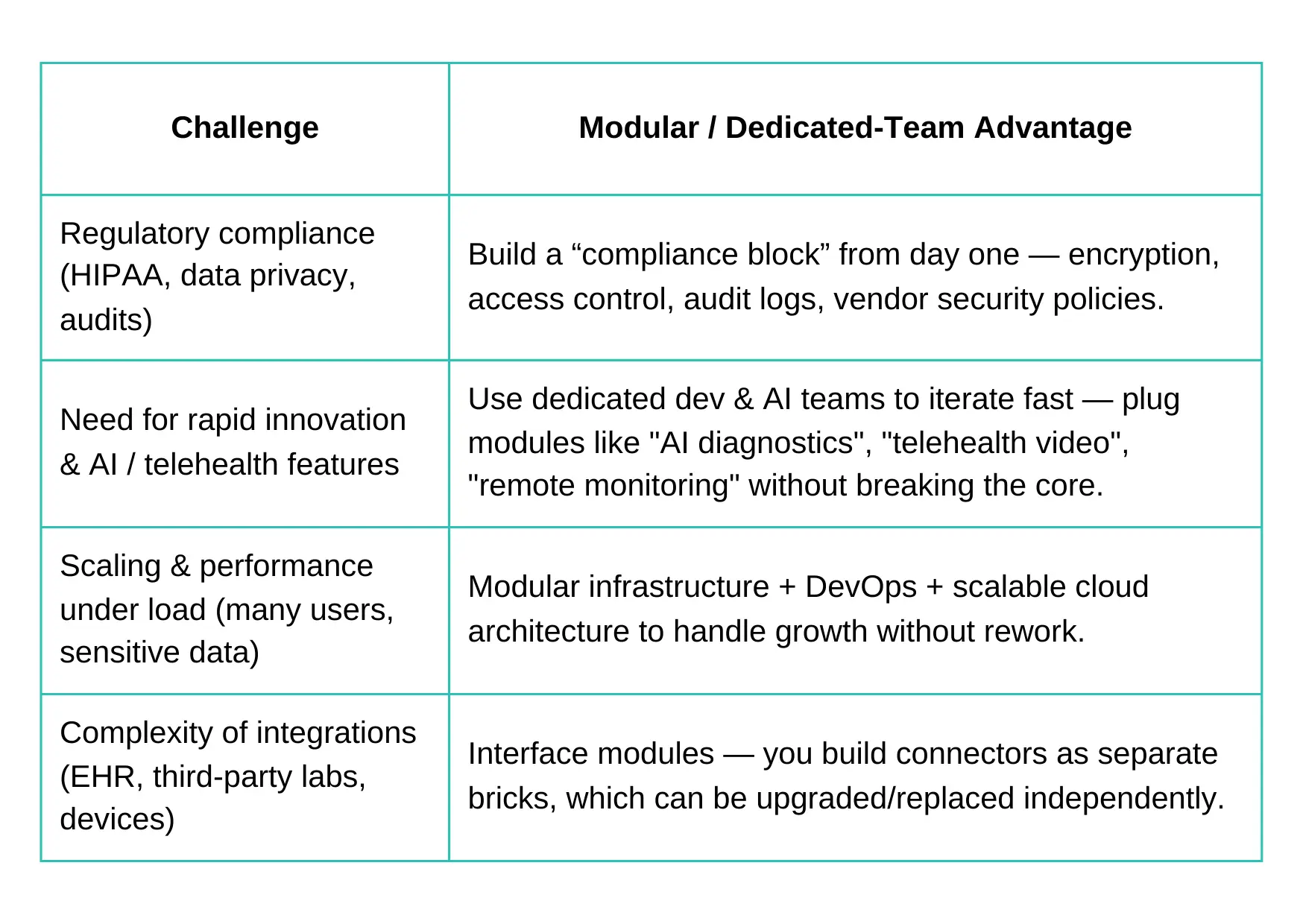
- Regulatory and compliance frameworks (like updated HIPAA rules) demand stronger privacy, data encryption, role-based access, audit logs, and secure vendor handling.
- Cybersecurity threats are rising: healthcare organizations remain among the top targets for ransomware, data breaches, and insider threats.
- The complexity of integrating modern software into legacy hospital infrastructures (EHR, billing, device systems, external labs) often exceeds what off-the-shelf tools can handle.
All these trends call for a different kind of software partner — one offering modular, secure, custom, and scalable solutions, backed by expertise and compliance from day one.
Unibrix’s Approach — Modular, Custom, and Compliance-First
That’s where Unibrix comes in. We don’t just deliver software — we build dedicated development teams, assemble custom “stacks,” and align technology with regulatory and business needs.
- Our AI development services allow healthcare providers to embed intelligent diagnostics, predictive analytics, and workflow automation into their platforms.
- Through our staff augmentation & dedicated team model, we offer skilled engineers, security specialists, and compliance-aware developers who integrate seamlessly as part of your team.
- We also support full product development — from architecture and MVP to scaling, maintenance, and compliance audits.
By combining modular architecture + dedicated teams + deep compliance awareness, we make sure your software is not just functional, but fit for the real world of healthcare.
Compliance & Security: Non-Negotiables in 2026
With recent regulatory updates, compliance is no longer optional. New HIPAA-era rules emphasize stricter encryption, risk analysis, secure data handling, and transparent audit trails.
Healthcare software must now:
- Guard Protected Health Information (PHI) via encryption, role-based access, secure storage and transmission.
- Support secure vendor management and third-party audits if external developers or staffing firms are involved.
- Be modular enough for updates such as compliance patches, audit log layers, and data-access controls without disrupting core workflows.
That’s exactly what Unibrix’s HIPAA-compliant software service delivers: full-cycle product development built with compliance baked in, not bolted on.
Real-World Example: The “Omniscience” & HIPAA-Compliant Builds
To illustrate, Unibrix completed two projects that embody this modular + compliance-first ethos.
- On the “Omniscience” build, we delivered a comprehensive data platform — modular, secure, scalable — designed to support sensitive data, analytics, and workflows.
- With our HIPAA-compliant offering, we helped healthcare clients build systems that meet the latest regulatory standards: end-to-end data encryption, role-based access, audit logs, secure authentication, and compliance documentation.
These projects prove that dedicated development teams + modular architecture + security mindset can deliver enterprise-grade healthcare solutions — whether it’s patient portals, analytics dashboards, or EHR-adjacent platforms.
What This Means for CIOs & Healthcare Leaders: Opportunities & Threats
Opportunities
- Build or modernize platforms around telehealth, AI diagnostics, remote monitoring, patient engagement, or data analytics, to meet rapidly growing patient demand and operational needs.
- Leverage dedicated teams (without hiring full-time staff) to build new or revive legacy software — saving time and reducing long-term staffing burden.
- Adopt modular, future-proof software architecture — which allows adding new features (AI modules, analytics, telemedicine, integrations) as needs evolve.
- Maintain security and compliance in a shifting regulatory environment — reducing risk of breaches, fines, and reputational damage.
Threats if you get it wrong
- Non-compliant software can lead to HIPAA violations — fines, audits, loss of trust.
- Legacy or monolithic systems can’t scale or adapt — becoming technical debt or liability when new regulations or integrations arrive.
- Ransomware, data leaks, or insecure third-party modules can expose patient data, leading to catastrophic consequences.
How a Modular, Dedicated-Team Approach Helps
Conclusion: If You’re Building Healthcare Software — Build It Right
For healthcare enterprises, startups, and care providers, 2026 isn’t the time for patched-up legacy systems or one-size-fits-all tools. The stakes are too high.
What you need is a partner who understands:
- The value of a dedicated development team — experts who treat your PHI carefully.
- The necessity of staff augmentation — flexible, on-demand scaling of your engineering capacity.
- The power of AI development services — diagnostics, data insights, automation.
- The importance of modular, secure software architecture, ready to evolve as medicine, regulation, and patient expectations change.
At Unibrix, we build serious software with the joy of play — and we build it to last, comply, scale, and protect. If you’re ready to build or re-build your healthcare platform, let’s snap those bricks together: secure, custom, modular, and future-proof.

Moombix

Kennitalan

Wooskill
technical assessment,
and project scoping.
UI/UX design, and
technical specifications.
reviews, and continuous
integration.
testing, security audits,
and bug fixes.
documentation, and
ongoing support.