Unibrix

Cases / Data Platforms / Omniscience

Get in touch
LET'S BUILD

Ready to start your project?

Tell us about your challenge. We'll engineer a solution that scales with precision.

KNOWLEDGE REPOSITORY

Omniscience

[ DATA & INTELLIGENCE PLATFORM ]

Designing a scalable data intelligence platform to visualize complex algorithms and bring clarity to large volumes of data.

CATEGORY
Data Platforms / Analytics
TIMELINE
2024-2026
COMPONENTS
Data architecture, analytics platform, intelligence systems
STATUS
● DELIVERED
SERVICES PROVIDED
Product Discovery
UX/UI Design
Front-end Dev
Back-end Dev
TECHNOLOGY STACK
Java
Angular
Ionic
Elasticsearch
Terraform
Azure
AWS
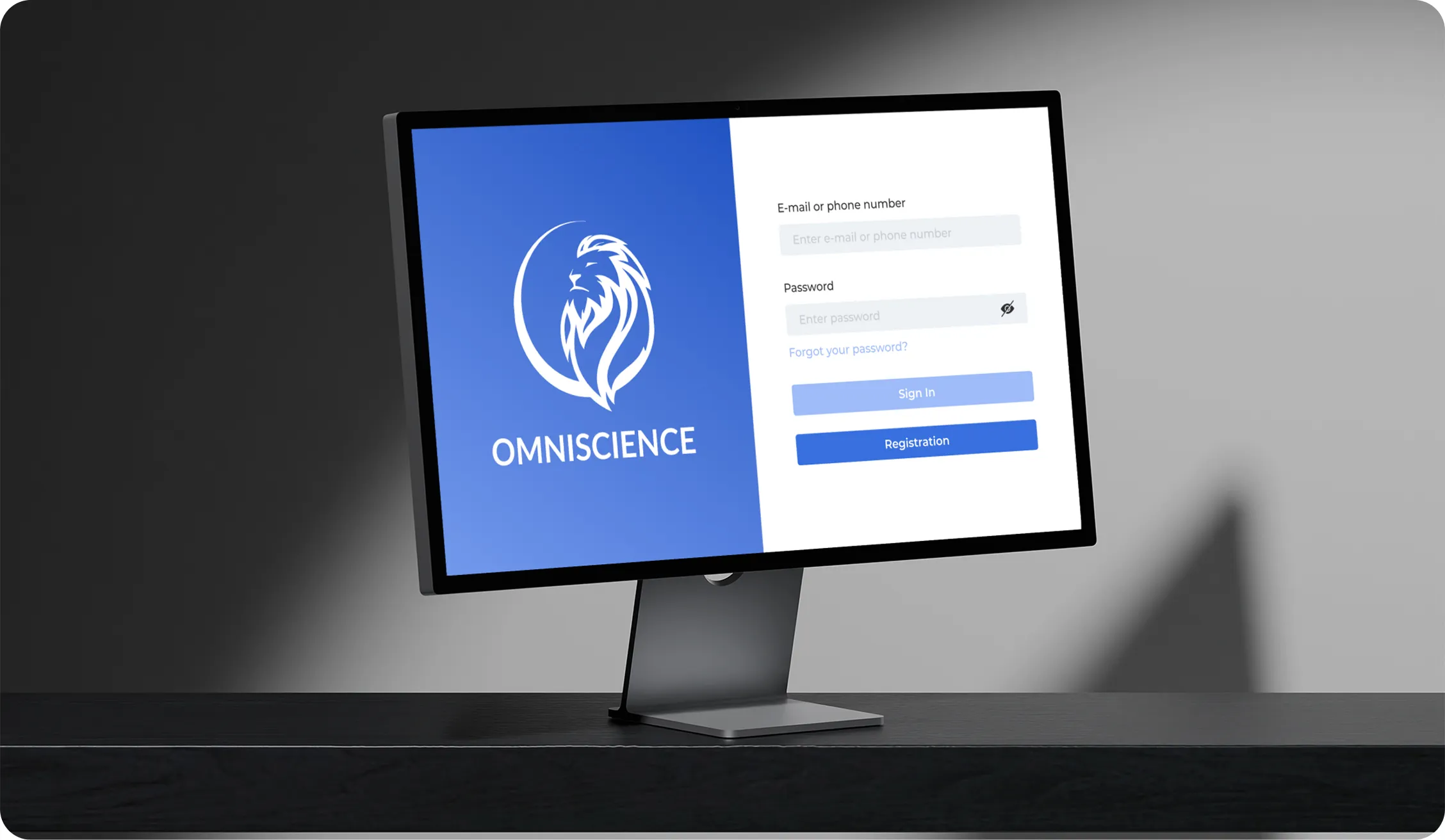
Computer monitor on a black desk displaying Omniscience login screen with email and password fields and sign in and registration buttons.
01
STEP 01 — Project overview

Omniscience focused on creating a platform capable of handling large volumes of data while making complex algorithms understandable and usable through clear visualization.

The project aimed to provide confidence in data-driven decision-making by transforming chaotic data into structured insights.

Primary focus
Visualization of big data algorithms
Centralized data intelligence
Clear and usable interfaces
Scalable cloud-based architecture
What we delivered
Data intelligence platform architecture
UX design for complex data visualization
Full front-end and back-end implementation
Cloud-ready scalable foundation
02
STEP 02 — CHALLENGES IDENTIFIED

Assembly Requirements

REQUIRED CAPABILITIES
A
Engagement. Making complex data and algorithms understandable for users without technical backgrounds.
B
Structure. Designing a system capable of aggregating and organizing large volumes of data.
C
Scalability. Ensuring the platform could scale across cloud infrastructure and increasing data loads.
03
STEP 03 — ASSEMBLY PROCESS

Solution Architecture

MODULE INVENTORY (4 COMPONENTS)
MODULE 3.1
● DATA FOUNDATION

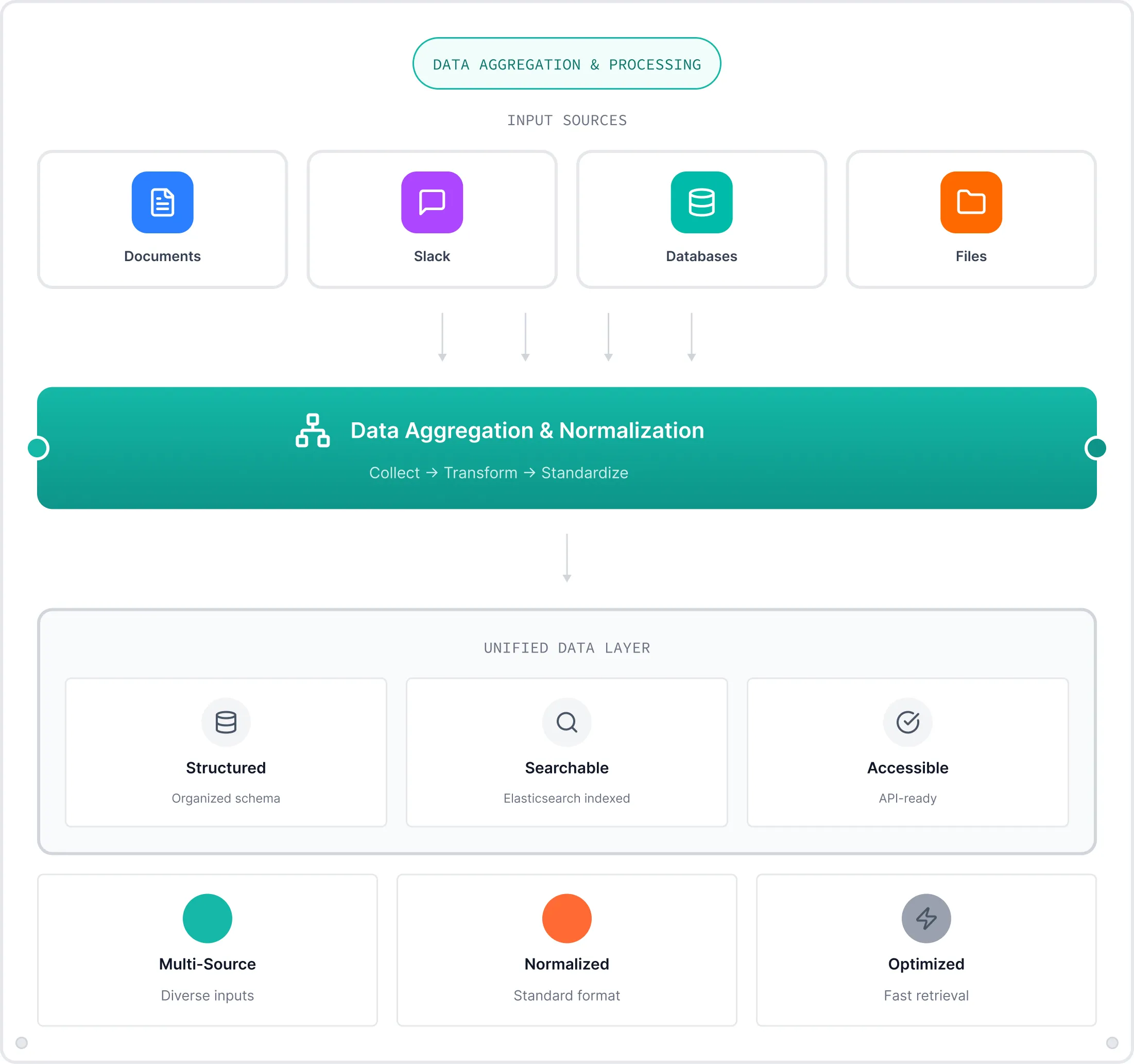
A structured data layer was created to collect, normalize, and organize data from multiple sources.

Diagram showing data aggregation and processing flow from input sources like documents, Slack, databases, and files into a unified data layer with features: structured, searchable, accessible, multi-source, normalized, and optimized.
MODULE 3.2
● ANALYTICS SYSTEM

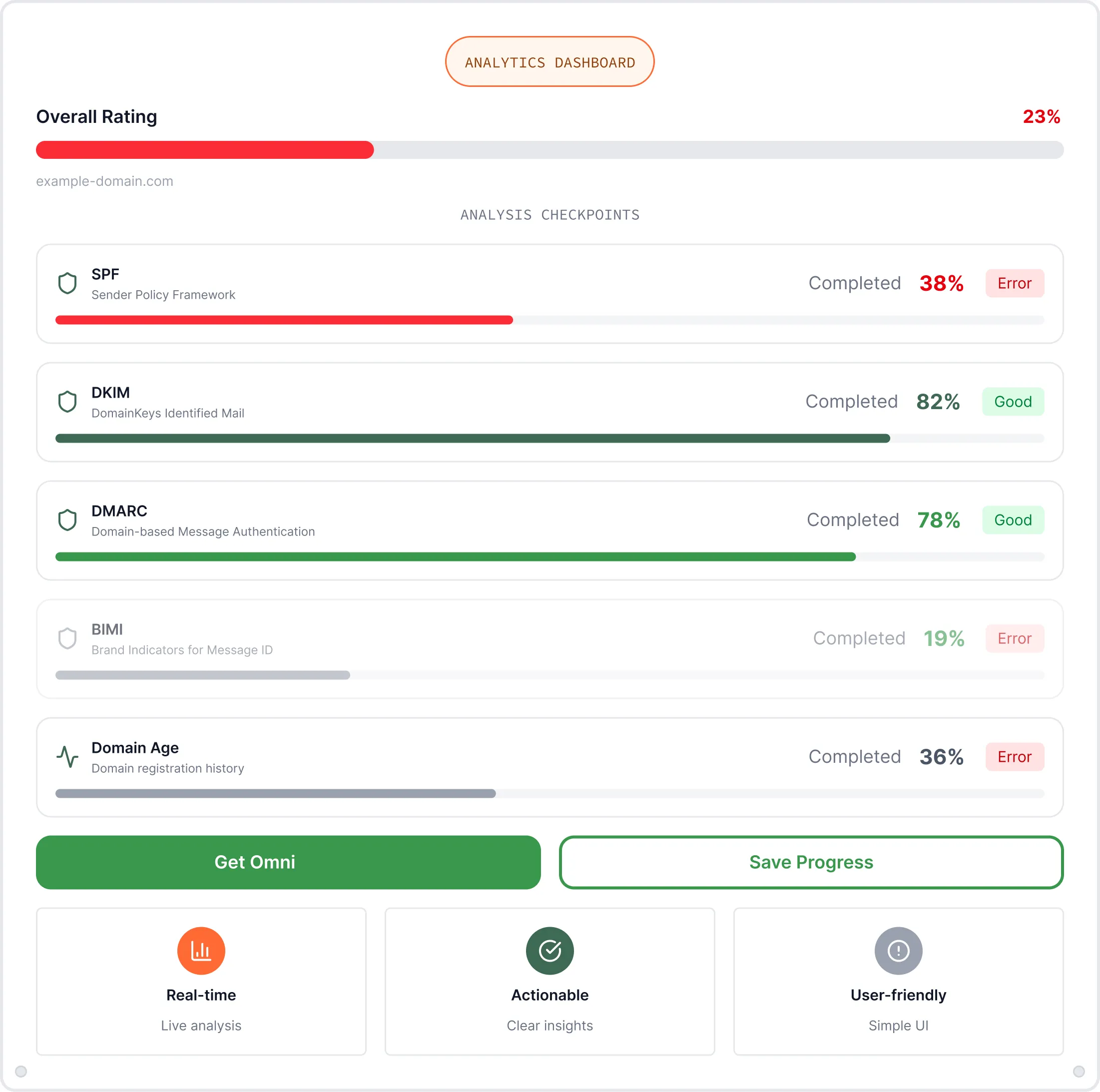
User-facing interfaces were designed to visualize data and algorithms in a clear and actionable way.

Analytics dashboard showing overall rating 23%, SPF 38% with error, DKIM 82% good, DMARC 78% good, BIMI 19% error, and Domain Age 36% error with options to Get Omni or Save Progress.
MODULE 3.3
● CORE PLATFORM

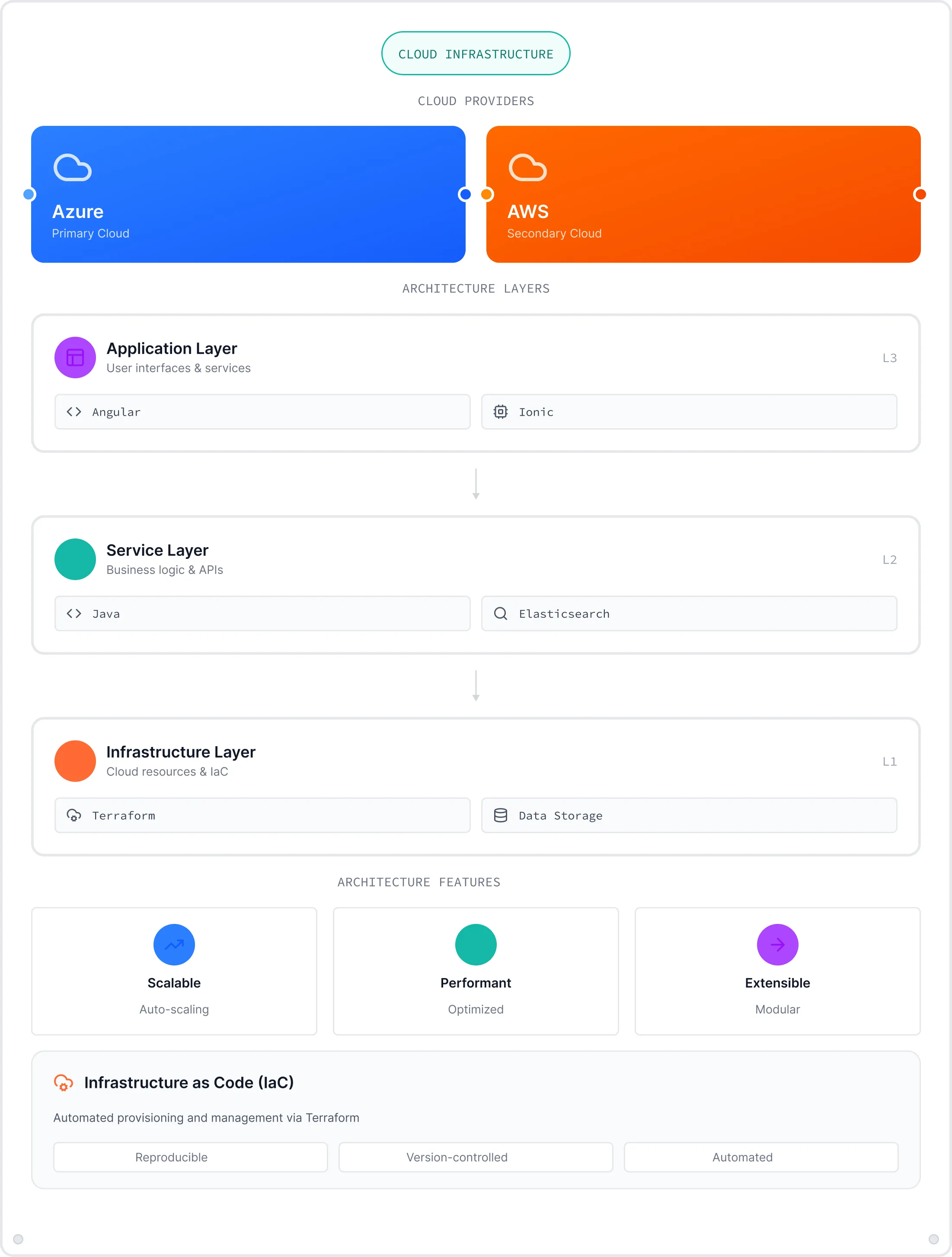
The platform architecture was built using cloud infrastructure to support scalability, performance, and extensibility.

Cloud infrastructure diagram showing Azure as primary cloud and AWS as secondary cloud. Architecture layers include Application Layer with Angular and Ionic, Service Layer with Java and Elasticsearch, and Infrastructure Layer with Terraform and Data Storage. Features listed are Scalable, Performant, and Extensible. Infrastructure as Code section highlights reproducible, version-controlled, and automated provisioning via Terraform.
04
STEP 04 — ASSEMBLY COMPLETE

Delivered Impact

PERFORMANCE OUTCOMES
A
Enabled visualization of complex data algorithms
A
Improved clarity and usability of large data sets
A
Delivered a scalable, cloud-ready intelligence platform
ASSEMBLY PHILOSOPHY
We don't just code.
We build systems.
Piece by piece,
designed to snap perfectly
into your vision.